Showing posts with label Esperience. Show all posts

Monday, 12 October 2015

Mothers

Everyone knows how mothers are: they want to take the best care of you, they want to nurture you and pamper you, they want to know your every move and they’re always worried about your safety.

I am the victim of a huge network of an extended family of such mothers all over North-East India: ever since my union with Glonț, the bikers and Enfield owners around here are twisting and turning, making sure nothing bad can happen to either of us. These tough Bullet riders with their honed knives and leather boots turn to tender loving swans when they have to take care of me and of Glonț.

If I ride with them, they are attending to my physical health (‘Have you had your breakfast/lunch/dinner?’) so much more than I would actually require, but I’ve literally heard it said that I need lots of food to have the strength to be able to ride Glonț. They are overlooking my manoeuvring technique, giving me subtle advice on how to put the bike on the main stand (can’t do it for my life), how to kick-start the bike (out of the hundred-something tries I’ve had doing this, I did finally manage to start it once or twice), when to start the bike so that it has enough time to warm up, when and how much fuel I should get, what spare parts I should always carry with me and where to get those from… Of course, most of my mothers tend to these issues themselves not letting me exert myself too much and they help me out whenever they think I might not be able to do something, like tying the bags on my bike or tightening a loose screw on Glonț.

The mothers also lovingly tend to the maintenance of Glonț, accompanying me to the nearest available mechanic although, unfortunately, the mothers can’t agree on the best mechanic around. This is how Glonț and I ended up going to several mechanics just in Shillong, each with his own idea and method of fixing the bike (more on this in a future post).

If I want to leave the nest, the mothers join forces and contact other mothers from along my route, so that these new mothers can take responsibility over me, greet me and accompany me wherever I want to go. The new mothers will then assume the duties of caring for my health, for Glonț’s wellbeing and all the other motherly obligations until again I leave the nest for another destination. Other mothers are informed and the circle closes once more…

My own responsibility is considerably reduced through this ingenious method. Mothers, guardians, chaperons or simply just friends always have the solution and I only have to tag along. This is why I don’t have even the slightest clue of the route I should take or even the name of the cities where we stop at night. And if anyone tells me not to worry – because, for some reason, my mothers always think that I do – I don’t have any concerns whatsoever about almost anything.

There is only one drawback to all this and that’s the fact that I need to check in all the time. It started with just one of the mothers but, as time passed and my mother supply got considerably bigger, by now I have to inform at least 10 different people of my whereabouts and my intentions. I get text messages every day which inquire again and again what, where, when, with whom… So now, whenever I stop on the road and switch on my phone, I’m bombarded with messages and calls and there’s not much else I have time for than to clarify every detail of my trip.

And if that wasn’t enough, this mother-network works in such a way that, by the time we get to a place, Glonț and I are perpetually anticipated; and after we leave a place, some mother from a different part of the North-Eastern states will have already known everything about our stay (I’ve heard it say that, because I was riding for about 300km in Assam, all the police force was informed not to even think about flagging me down).

If we tried to be alone, ride solo or stay for a while without motherly contact, the mothers would probably get consecutive heart attacks and would turn the whole of North-East upside-down just to find us (and they would probably succeed in doing so).

Bottom line is this: being a mother is hard; but it’s not easy being these mothers’ kid either.

Monday, 14 September 2015

Bullet For My Heart

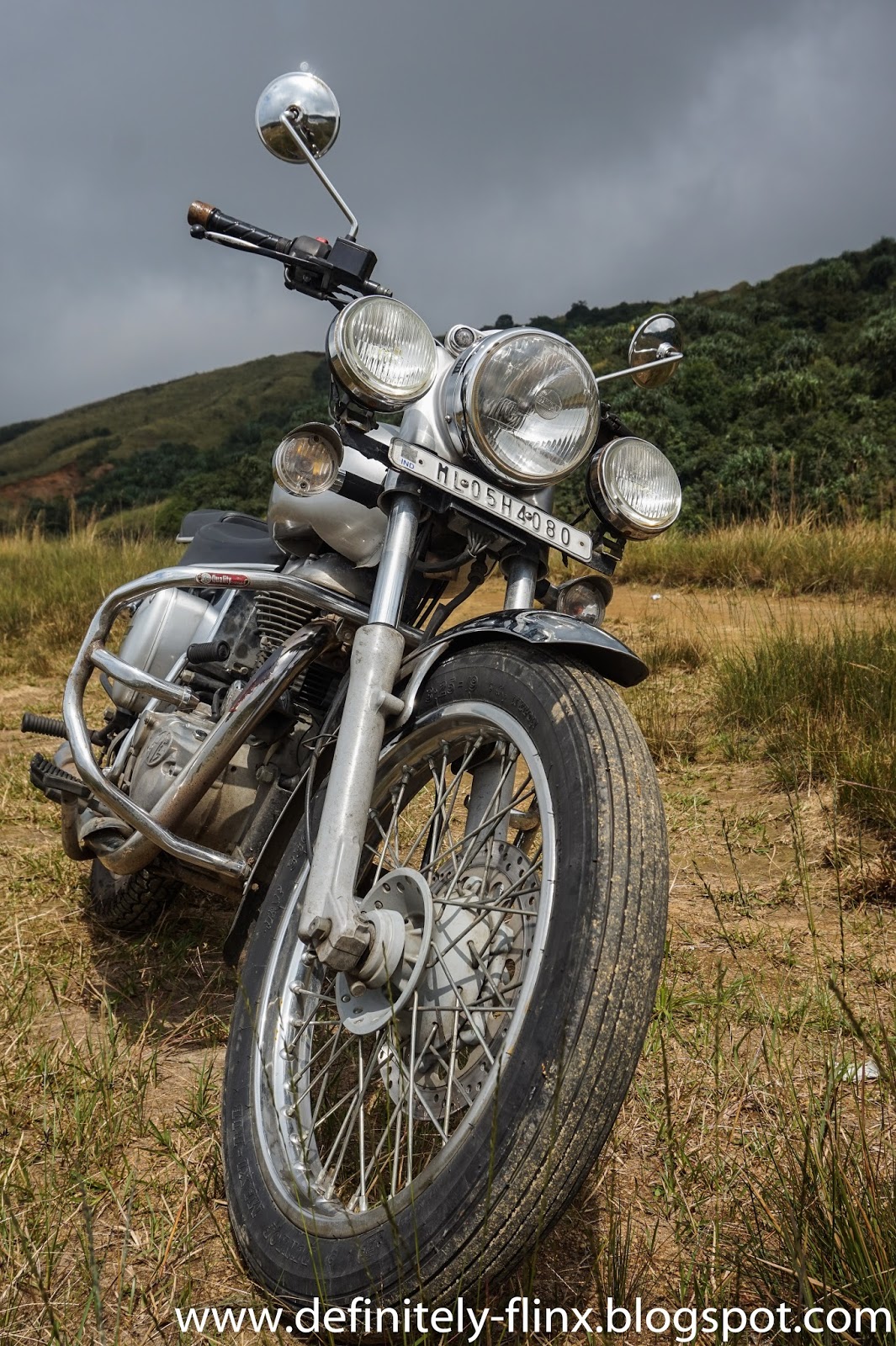
I am in love.

There is nothing in the world that can be compared to this feeling, this amazing sensation that makes you not to be able to contain yourself any more, this feeling which seems to overflow through every pore of your being, transformed from pure emotion into particles of light, making you agile and denser at the same time. Your precious secret makes its way out through your every action, every thought and every gesture: there’s no denying it and it can’t be held back any longer.

Before I saw him, I heard him from the distance and that song made me feel conscious of everything around me, senses heightened, heartbeat elevated, knees weakened, the roaring sound piercing swiftly from the ground below, rising wildly, shattering my eardrums and reddening my cheeks. It was the sound of Cupid’s missile shattering my heart.

And then I saw him. It was, indeed predestined. It was, possibly, love at first sight. There couldn’t have been a better match. His towering presence made everything else fade, turning the surroundings into a washed-out black and white setting with his strong overpowering build the center of attention. No eyes could turn away and he was painstakingly, secretly studied from every possible angle, and no one could deny his flawlessness.

And he was mine. So proud I was about my most recent conquest that feelings of excitement, anxiousness, nervousness and nausea competed for their turn at the steering wheel of my heart. In the end, love won, for the perfect stud had all he needed to sweep me off my feet and carry me away forever.


His name: Glonț.


Thursday, 30 July 2015

Behdienkhlam - The Mud Dancing Festival

‘Go to Jowai. There is a festival there. I think you’ll like it. Jaintia tribes-people celebrate the sowing, trying to drive away plague and diseases and hoping for a good harvest. The men dance in the mud and carry huge chariots around and go from house to house carrying bamboo poles and beat the rooftops of the houses to symbolically drive away evil spirits.’

That’s what I’ve been told. And why not go and see men dancing in the mud in a pre-Christian sacred ceremony of a religion that also worships one major god and other lesser spirits?

Incidentally, another Romanian fellow is travelling around the area on a Royal Enfield bike, so we decided to go together. But Romanian customs work just as well even 10000 km away from the motherland and, although we started riding at around 11 AM, we managed to lose track of time and cover the 120 km from Cherrapunjee to Jowai in almost 5 hours. Of course the ceremonies will wait for us; we’re Romanians after all. At least that was what we’d hoped. But by the time we reached Jowai, the biggest city in the Jaintia Hills and the place where Behdienkhlam is held every year in July, the masses of people walking hurriedly through the streets meant that the mud dancing part was over. No matter, the weather was great and the people were in a celebrative mood, so we stayed around to see what else was going on. And, sure enough, our patience payed off: each year after the bad spirits have been chased away (through mud dancing, clearly), the locals have a football match between the upper part of the town and the lower part, making the winning team the agents of good crops on their side of the town.

Not only is this a very serious matter, kept every single year for generations, but it is also the perfect occasion for the townspeople to display their best clothes and accessories. We went along with remarkably well-dressed families (feeling very out of place with our own modest attires) and sat down on the side of the road in a large square lined with shops and masses of people to watch the football match.


The town’s elders, dressed in Sunday clothes bearing ceremonial canes arrived bringing along the traditional ball, the one used over and over again for every match. Something seemed out of place: why would the elders carry a coconut for a football game? But, as it was explained, this is a wooden ball, used so many times that the wear and tear of countless football games shrank it to the size of a fairly round grapefruit.

The players followed in this strange procession: different every year, these young men proudly engaged in what would turn out to be a fight that could have been easily mistaken for a mass kickbox match with a funny wooden ball misplaced amongst them. They would run around the square barefoot, hitting the wooden ball, trying to score for their side of town.


The game began. Kids, photographers, town elders, policemen, and bystanders all gathered as close as possible to the players, leaving only a small circle for the players to pass the ball. Whenever the ball rolled to a side, the circle would also move accordingly. I couldn’t distinguish any delimitation for this football field and it appeared that neither did the players, the referees or the onlookers; nor did they really care about that. Casualties were left to tend to themselves as the game went on while the spectators cheered for one team or another. The confusion climaxed in another part of the square, so it wasn’t clear for me who won. I was to find later that, as it mostly happens, the lower part of town won the game. I suspect that it’s also because the terrain is slightly inclined towards the lower part and, naturally, the ball would eventually find its way there.


The people quickly scattered after the elders proclaimed the end of the festivities, leaving everyone to enjoy the most important holiday of the Jaintias however they liked, mainly by carousing until the early hours of the morning, dancing happily to music played on cell phones, eating barbequed meat and rice, and simply enjoying themselves all night long. We were invited to join a family of no less than 100 relatives, who kept on coming and going, drinking rice beer, shaking various hands and taking countless pictures with us.


Well, the next day, a beautiful, peaceful Sunday, the bike refused to start. No pleading, persuading or cajoling could get the bike moving and no mechanic could be found awake and/or sober to take a look at the electric wiring, as all the people in Jowai were having their well-deserved rest after the celebration. A full day of waiting around resulted in the transport of the bike and us in a pick-up truck that came to our rescue from Shillong, where we spent the night.


To recap: the whole trip turned out to be a hell of a roller coaster ride – fun to be on and eager to look past the next turn – and my disappointment that we missed the actual ceremony of the festival was put aside because everything else was really great. Still, next time, I’ll try to be in time for the mud dancing.

Tuesday, 28 July 2015

Working Away the Rain

As you might know by now, I’m in Cherrapunjee (a.k.a. Sohra) in the far away land of North-East India, where butterflies and tribal people roam free all around, and where any good day is a day without 4 hours of continuous rain. Even so, if the rain doesn’t melt the last remaining thread of fabric from your clothes, the humidity – usually orbiting the 80% area – will probably get to you in ways unimaginable to anyone not born here.

When it’s raining, there’s one of two ways of spending time: counting heaps of money or engaging in the deep-rooted art of making children. Since none of the two is available to me right now, I desperately needed to find something else to fill my time. And that could only mean manual labor. I’ll grant you, usually it shouldn’t be the type labor that requires lots of space and/or proper tools to undertake it, but if there’s no other possibility, even that will do.

Confused? Well, let me explain: out here time is mostly spend inside. And if the inside is not big enough, one must find ways of making it bigger. That’s what we started out to do. Heprit, this great guy, who also happens to own the hostel I stay at in Lower Sohra and me decided to change things around here and make the common room/reception bigger.

Imagine a 4x4 meter room with a door and two windows on one side. Now imagine that as soon as you step in, you are confronted with either going to the right and virtually walking into a DVD rental place, or striding to the left and thus landing in the hostel’s reception. These areas are partly divided by a plywood wall right in front of the door, leaving about a meter in front of that for people to decide which way to go. We agreed that the best (and only) way to make a bigger reception where people could also hang out would understandably be to shrink the DVD rental. Also, in order to give the people some intimacy from the inquisitive eyes of the locals, Heprit, who also happens to own the DVD rental place, and me decided that the best place to expand would be behind the DVD rental.

Our planning summed up no more than one full day of steady work. But as my mother taught me, to get to the real amount of time any construction work takes, you’ll have to multiply what you planned by three and then hope for the best. Still, our minds were racing towards the end of this prodigious effort and didn’t even bother to think that it might just possibly take a little longer, considering the fact that we started at 2PM. After taking down all the DVDs displayed on the shelves and the shelves themselves, we intended to move the back plywood wall about halfway towards the front. But for this to happen, we had to first fix the shelves so that the plywood could be secured onto something. Well, by the end of the day, half of the shelves were in place.


On the second morning, we realized that if we put all the shelves up, there’d be no way of getting out from the back of the DVD rental, because we hadn’t cut through the wall towards the common room. So we started on chopping the dividing wall so that we’d have access on all sides.


Fixing the back plywood proved a bit tricky, as we couldn’t see where to nail it to the shelves from the back side so, on a closer look, you might see a small assemblage of tiny holes (and only imagine the thunderous diatribes we uttered every time we hit nothing on the other side). Still, on the third day, all the DVDs were dusted and put back into place.


The back room is still not ready; we came to an abrupt halt because we are not sure how to go on and what exactly to do back there. But in the meantime, friends come and help out with difficult tasks, such as applying the varnish, being fully, professionally equipped:


There are other projects filling my time. For instance, the 3-day disco ball made of old CDs or the new sign from outside the hostel, complying with Heprit’s requests and fashion sense, so I have yet to be bored.


Before
After

If it ever rains and you find yourself with nothing better to do than change the size of your DVD rental place or brake some scissors while trying to cut through old CDs, feel free to give me a shout and I’ll walk you through any of these projects free of charge and with accurate time spending information. After all, you know what they say: ‘If at first you don’t succeed, try a bigger hammer’. Alternatively, 'If at first you don't succeed, destroy all evidence that you ever tried'.

Tuesday, 14 July 2015

The Road to Cherrapunjee

The ex-wettest place on Earth; the ex-rain capital of India; a side of India that not even India knows: Cherrapunjee. And that’s my destination.

But how much time does it take to get there? And how can I escape the hectic, tiring India that I know? And – last but surely not least – where can I smoke in airports?

These are the issues that concern me when I desolately wave my mum goodbye as the train leaves the Cluj railway station. It’s easy, I think to myself, it’s just an overnight train ride to Bucharest and from there on it’s just a bunch of flights to get to India… And, once in India, I’ll find a way…

But as I make myself comfortable in the train compartment, the elderly gentleman solving Sudoku starts talking… and so does the young guy sitting across from me. Their polished political discussion makes me cringe and I pray that they don’t include me. But wouldn’t you know it, they are too polite to leave me out of their animate discourse about communist Romania and I have to chip in, trying to look intellectual and attentive. The elderly ex-teacher remembers the outrages of the communist party and the younger one commiserates and contributes with personal stories (although he couldn’t have been more than 3 at the time of the revolution). I excuse myself and jump on the upper bed feeling confident that my counterattack will silence them. Indeed, they retire to their own beds and stillness settles in. Me – 1, train – 0.

As soon as I wake up, the gentlemen start talking again. I can sense that they have been waiting for me to get up so that they continue their war stories. But I interrupt, wondering why the window is badly cracked, in the form of a beautiful snowflake. They are surprised that I didn’t even budge at the loud strike that happened sometime around 3 AM, when some bored people decided that the best way to spend their time was to throw stones at a passing train. Well, I think, good thing I finally decided to take the advice of the older gentleman and not sleep with my head close to the window! Me – 2, train – 0.

Bucharest doesn’t seem such a bad place on a Sunday morning. Traffic is light and the way to the airport seems pretty straightforward. The next 3 ½ hours will pass somehow, if not by talking on the phone with the early birds, then by reading about the Hell’s Angels. But by the time I board the flight, I’m honestly wondering how I will take another 15 hours until I reach India.

Heathrow Terminal 4. Instructions: get to Terminal 5 and wait 5 ½ hours. No probs, I think. The terminal is just a bus ride away and if I get there soon, I can pass the security check, browse the stores and sip coffees and smoke cigarettes. As I discard all the loose change in the tray that is being x-rayed along with my handbag and laptop, I fiendishly plot the safe arrival of a refugee lighter to the other side. I succeed and for a minute I stop brooding over the plane seat I received (somewhere in the middle, crammed between many other people), which will become my home for the next 9 hours. I chase away the thought and look forward to some coffee and a relaxing cigarette. But the blonde untroubled lass at the information desk cheerfully informs me that Heathrow airport DOES NOT HAVE SMOKING AREAS AFTER SECURITY CHECK. It’s as if I’ve just won a race and now they tell me there isn’t any prize to win. Airport – 1, me – 0.

I can’t believe my ears. This can’t be. All these people sitting here, waiting for delayed flights, patience running out, nerves stretched thin… How is this possible?

‘Oh, but it is’, says a nice airport officer, who can see the pain in my eyes.

‘But… isn’t there a way?’ I ask, a spark of hope blooming timidly in my heart.

‘Well…’, she says.

The next thing I know is that I’m being escorted out of the airport through a labyrinth of corridors stretching for kilometres taking me outside to where the bus left me, a heaven-sent for smokers, with only a promise that I will come back, go through security check again and be in time on the other side to board my plane. My spirits are lifted, my cigarettes are puffed and my coffee is sipped lazily under a smoke-shrouded tree. Nothing could make me happier. Well, nothing except a nice shower or at least a change of clothes. But I take what I get. Airport – 1, me – 1 (ha!).

Back inside again, sheltering the same lighter and a sense of victory over the higher airport forces. I board the plane, preparing for some 9 hours of:
-       polite conversation – forced,
-       kindly asking other people to let me out of my seat to use the toilet,
-       fairly new movies interrupted by the captain’s announcement (English and Hindi),
-       airplane food, distinguished for its lack of taste (but, in my case, vegetarian a.k.a. savoury),
-       swollen ankles.

New Delhi greets me with morning heat and angry co-passengers. As the flight was delayed, our arrival in Delhi meant that people lost their connection flights or were simply late to get somewhere and, let me tell you, patience isn’t one of India’s strong suits. But I wasn’t worried. I had about 4 hours to spend in the airport until my next flight to Guwahati. A quick smoke outside the airport under scrutinizing Indian eyes while declining taxi drivers made me retreat in the comfort of the airport. Coffee? Yes! And how well would that go with another smoke… But what do you know? Once you get inside the airport, you cannot go out and guess what? There is no smoking area before security check. Indian airport – 1, me – 0.

I cannot check my bag in for another hour so I gloomily drink my (very hot) coffee feeling very self-conscious about my appearance (and, probably, my body odour). Finally, the time comes when I can walk past security check and wander through the unknown insides of the airport. No points for me here because sipping coffee while smoking cigarettes isn’t any fun while using cash-less ATMs and guessing PIN codes (a story for another day).

The gig is the same: board flight, take seat (window seat – yay!), get food, sip coffee, sleep restlessly, watch ground getting closer… come 5:30 PM spring to attention next to the conveyor belt, wait for bag, get bag....

Well, folks, I know that there are some methods of covering the last 100 km from Guwahati to Shillong: shared jeeps, busses, shared taxis. But I also know that from Shillong there are still 50 km left to finally reach Cherrapunjee. Which means that the only possibilities are to a) either find a guesthouse in Guwahati and spend a night so that in the morning you can get to Shillong and, eventually, Cherrapunjee; or b) find a shared jeep that takes you to Shillong and start looking for a hotel there so that the next day you will be able to cover what’s left of the distance. There are no public means of transportation during late afternoon and/or night. Don’t be fooled! The remaining 150 km mean a long, winding series of bends meandering up more hills, which translates into a 4 ½ hours’ continuous ride.

Already having this information, I opted for the third option: hire a private taxi from Guwahati airport to Cherrapunjee. And this proved to be the right way to go, as at 10 PM I was already chatting with the great Khasi people in Cherrapunjee. Impossible Indian traffic – 0, me – 1 (ha! again!).

So, to sum up: It’s really not easy to get here, but once you have, you’ll hardly want to leave again. Why, you ask. Well…


Tuesday, 9 September 2014

Rip-Off Sri Lanka

Meditation can wait. Frustration cannot.

Even though I’m supposed to be calm and shanti after the meditation retreat, I decided that this is the place where I can enumerate my frustrations like on an extensive grocery list (better yet, a discarding list). Sri Lanka is the land that can fill up a whole tome of grocery lists of frustrations, frustrations that surface mostly when you’re spotted as being a foreigner, and trust me when I say that being anywhere over 1m50, with a non-dusky skin complexion, and with dreadlocks blending in might be considered somewhat extreme. And they’ll spot you faster than you can blink. When I say ‘they’ I mean everybody. You see, they’re not stupid, I’ll grant them that; they’re actually pretty smart and cunning and have been able to turn any remotely interesting thing on their island into a business opportunity (just like the Lonely Planet, but that will be the subject of a future post), attracting gullible tourists like a light bulb attracts moths. I’m not even going to enter the ‘hellotaximadam?’ on the list, even if it tends to get on my nerves when 10m away from my guesthouse not one, but all the taxi drivers on the road ask me if I want a ride; or that when I’m patiently waiting for the bus at the bus stand, two separate tuk tuk drivers offer their services or just simply say ‘come, I’ll take you’ (and they don’t even know where I want to be taken and probably don’t care)… I hold that it’s good to try your luck and, of course, business is business and there may well be credulous tourists around, so the better your people skills are, the greater the chances to get some work. I can deal with that and usually try the polite approach, amicably refusing their magnanimous offer (at some point I found out that sarcasm or derision have proven to go sky-high above their heads). No, these widespread Asian techniques cut no ice.

The seed of my revolt lies a lot deeper, implanted with the precision of a sharp dart in the bull’s-eye of the shattered tourist paradise that is Sri Lanka.

Sri Lanka is a beautiful country. Trust me! And it’s a country where tourism is in bloom but not so much for backpackers and ramblers as for the classic tourists; people who leave their daily jobs and lives for 2 or 3 weeks and look forward to a nice relaxing time either visiting historical sites and experiencing cultural aspects, or chilling back on beaches and hilly tea plantations, or both. They’re looking for Services, Wi-Fi and swimming pools and they’re prepared to pay the price; the tourist price; the price that is being asked. The overpriced price. Which means that the rest of us have to struggle to find the backpacking scene, the underground scene, the authentic scene.

Cheap accommodation? It’s either $15 per person in a not really run down place (but usually painted in a baby-pink or Paris green shade), or the shabby, shady dorm room or YMCA, which is hard to find and can use a good sweeping (or, in some cases, a big barrel of petrol and a match). Cheap food is easier but as soon as a place makes it in the Lonely Planet or on TripAdvisor, the prices shoot up like fireworks in a Maltese factory. And that’s only the least bothersome of issues.

The bulk of the problem lies with the attractions and, as luck would have it, everything is considered an attraction. Also, every attraction has a price. An overpriced price.

Anuradhapura is one of three very old, very important historical cities in the cultural triangle of Sri Lanka. And it wasn’t really surprising that the entrance ticket to the ruins and temples of the old city had a price on its head that locals would surely never afford (they don’t have to, as they have their own ‘local’ prices, but still): $25. The other attractions in the triangle range from a measly $10 for a temple in Kandy to an obscene $30 for the Rock Fortress at Sigiriya. And even where there’s no entrance ticket, you’ll have to pay the friendly-looking elderly Sri Lankan who accompanied you for a while to make sure you don’t get lost when trying to get to Ella Rock (as business is better not to maintain a proper pathway and thus let the poor, ignorant Westerners lose their way and squeak for some assistance in mid-trek).

And then there’s the Dowa Temple, a low-key, highly religious site, the actual reason why I started this vicious rant.

Yesterday was marked in the Sri Lankan calendar as Binara Full Moon Puya Day, an official Buddhist holiday, when people go to temples to pray and give offerings to Buddha. The monks chant (through speakers, no less) and pray and there’s a festive atmosphere all around, with parents guiding their barefooted toddlers to and fro the temple grounds, offering flowers, lighting oil candles and sitting in prayer all over the place. I walked through the temple grounds feeling quite peaceful, smiling to amused Sri Lankans and taking photos of the 4m high unfinished Buddha statue carved into the rock face. And as soon as I entered the temple, an elderly caretaker surrounded by pre-teen monks greeted me with ‘’Scuse me, madam, ticket here.’ I was more than willing to offer a small donation for the conservation of the temple and I even had my 20 rupees handy (it’s the usual amount I’ve seen locals donate), but the guy beckoned me to his desk and extracted a bunch of colourful tickets to hand one over to me. His mistake: after saying ‘ticket’ he also said ‘h’ndrd rupees’ so I took a closer look at the alleged ticket and even upside down I managed to read the bold black letters on the paper: DONATION. My 20 rupee’d hand stopped in mid-air and the guy and I locked stares and for a second there didn’t move, like two tomcats preparing to jump at each other’s jugular.

‘What?’ I asked. ‘Donation, no?’

‘H’ndrd rupees…’


But he probably realised his tiny tactical error and stared intently at the ticket stubs lying flawlessly in his hands. He then ignored my 20 rupees and waved me inside so I went in and looked around. Five minutes later when I emerged he suddenly found something else to do and hurriedly left his station, leaving the kid monks to negotiate a donation, which didn’t miraculously increase because of any sudden enlightenment on my part.

Wednesday, 27 August 2014

Meditation or Medication?

Today is a very special day, which I'm sure I will remember a long time, as it's the day I'm checking myself into a Vipassana Meditation Centre so that I can whine about it later. There will be 10 days of waking up at 4 AM, sitting down until the back muscles give out and start complaining (that usually happens by the third day), no communication whatsoever with the people inside or the outside world, no technology, no books, no writing, and above all no smoking or using any type of intoxicants. Again! And, surprisingly, it's all done out of my own free will, this being the reason why I think I'd rather need some medication for having made this wonderful choice. So, I'll be sure to check in here after I escape from the centre. 

Tuesday, 26 August 2014

It's A Jungle Out There

There’s only one word you can hold high in a cartoon-like bubble above your head, just like you’d hold a big flaming torch in the darkest cave: awesome! This place is awesome! This should be used for the times you return from the speechless bewilderment when confronted with the scenery of Cherrapunjee. No wonder you stumble on every little pebble in your path: this isn’t a time to be looking at your feet; time well spent here is having your eyes wide open, looking over the plateau stretching all around, speckled with valleys so deep that the foaming rivers seem mere brush strokes somewhere far below. You can argue that the place is even more awe-inspiring when the rainy season strikes head-on and the plains turn to a surreal green full of the strangest creatures that walked the earth: butterflies the size of a large cabbage leaf, centipedes with Mohawks, and slugs that cause all your hairs to stand to attention. Anywhere you turn you can see waterfalls, big or small, but each as impressive as the next one. And you’d think that such a rainy place would have you clattering your teeth because of the cold but you’d be wrong. Well, mostly.

There’s the nasty little feeling when, waking up in the morning, after a good night’s sleep thanks to the humdrum sound of raindrops falling on the roof, and to the makeshift wind chime clatter coming from the television tower across the road… that’s when you get that unmistakable feeling that, in spite of all of Mother Nature's beauty, which you can observe all day long, you still need to use the toilet. Right this minute. And, as there’s only an outhouse 30m away, you sigh, give up the warm embrace of your bed, step outside and start running. And then you stop, return, hastily grab the umbrella and make a run for it again.


When you feel you have admired and awsome’d enough (which will probably never happen), you can tackle the 3500 steps down to the jungle strategically hidden in one of the valleys. The 1000m elevation difference allows for a new type of scenery to unfold magnificently, so that you don’t need to discard your bubble of awesomeness just yet: it’s a real jungle out there, where climbers and creepers rule even over the people, who seem to have vines instead of veins blending perfectly into the background. You’ll soon feel like a modern age Alice who has stepped into never-never land and will have the urge to have a pleasant conversation with everything surrounding you, flowers and insects alike. There’s no end to the hours you can spend watching the spiders spin their cobwebs and there’s no explanation as to why these creatures deliberately place their traps at a human head level, so that wherever you walk, adopting the same looking-everywhere-around-you-except-where-you-step pace, you’ll inevitably end up with strands of webs across your face.


And once you reach the root bridges, you’ll never want to see concrete again!


Awesome!

Wednesday, 30 July 2014

No Man's Land

I got to Kakarbitta, which would surely be my last stop in the kingdom of Nepal, as it’s a border city, enabling travellers to get to the north-eastern part of India. I thought that Ilam would be my last Nepalese stop right about the time I thought I would catch a direct bus from one tea country to the other, from Ilam to Darjeeling respectively. But, as always, plans are usually changed faster than socks and I ended up in Kakarbitta.

The buzz and heat only reminded me that the border is just a virtual one, that the first person I’d meet would not be that strikingly different from the ones on the other side of the border. And, sure enough, I still couldn’t tell the difference between Indians and Nepali even at gunpoint.

The Indian-looking Nepali at the hotel was very kind to explain that the cheapest way to get across was to walk (preferably with eyes and ears closed so as not to get distracted by the myriad of offers of rides to the other side of the border, to Siliguri or Darjeeling, or to any other happy place, made happy by my own existence and the existence of the person offering). So, within 10 minutes after walking up that morning, I started walking to India.

The border trend seems to be bridges; and, of course, there’s a bridge crossing to get to the Indian border: a bridge long enough to make the crossing irritatingly hot and sweaty even in the trickling rain, so that people would be either really exhilarated or immensely exasperated by the time they reach India. I was definitely on the reasonably irritated side of things by the time they pointed me to the Indian Immigration Office, welcoming me with shouts and preposterous offers for the most uninspired transportation means to major Indian cities, an eye-watering deal that could well mean the most memorable welcoming present to India for any credulous traveller (it would also mean that a considerable amount of one’s budget would go towards the maintenance of the shabby jeeps which would provide the transport to any Indian city).

So, after having some really friendly Indian policemen welcoming me on the other side of the bridge, I hopped around the alley leading to the Immigration Office because it was under construction and, eventually, got face to face with a nice officer who shoved some forms under my nose and proceeded to ask me about my favourite football team. After filling out the immigration forms, the officer turned to his job and started analysing my handwriting and checking the highly important information. And just when I thought I’d get the stamp of approval to go crazy anywhere in India, the officer asked if I had ‘checked out’ of Nepal. I was flabbergasted; there hadn’t been an Immigration Office on the Nepali side of the bridge and I didn’t know you had to officially say that you were leaving Nepal.

‘You need to go back, ma’am, and get the stamp from Nepal Immigration Office in your passport. I would take you myself but I have to stay here… so maybe if you wait for half an hour, I can take you.’

Lovely offer, really, but I chose to do it myself and left my backpack in India, leisurely walking back to Nepal. I’ll tell you this: the bridge didn’t get any shorter in the meantime and the stroll was not all that much fun, as the motorised traffic between the countries with its unceasing honking – a sure sign of joy or sorrow for leaving or coming into a country – was as pleasant as having a tooth extraction. At the Nepali Immigration Office nobody was at work, which meant that I had to spend more time in Nepal waiting for someone to put a goodbye stamp in my passport. They eventually did that and soon enough I was back on the bridge reminding myself that the careless Nepali ways have just been replaced by the complicated Indian methods of doing things. And I knew I was back!


On the upside, I did get a neatly written name and phone number (‘If you need any help…’) from the Indian immigration officer and made my first true, honest friend in India.

Monday, 30 June 2014

Story of My Life

Bhaktapur is one of the most inspiring places Nepal has to offer, especially if you’re into an artistic mood. The city’s many squares offer a variety of crafts, craftsmen, and workshops, from woodcarvers to jewellers, potters, and thanka painters. So, of course, staying a week here gives anyone a chance to work on their creativity.

Which is what happened to me: after Bhaktapur enriched my resourcefulness in just one day here, I came back only to find that I have too many options to choose from to enhance my artistic skills and too little time. So I finally settled on something I did before at home: pottery. Something that basically involved getting mud all over myself while sweating over a potter’s kick-wheel and trying to throw something resembling a vessel at the same time. Usually, the result was no more than me finding it extremely difficult to remove all the hardened clay off various parts of my body, and a small roundish object that would have to be called – for lack of a better word – a small pot. At the time, my teacher always joked around trying to make me feel better, saying I’m really getting good at making various kinds of ashtrays: nothing much ever got higher than a respectable cigarette-discarding receptacle.

But now, in Bhaktapur, I would have the chance to have a go at pottery again and prove myself worthy of the term amateur potter. So, I went to – unquestionably – Potters’ Square


where a true-blue potter said he would teach me the secret of this ancient art. I would only have to watch closely and practice, practice, practice.


For starters, he said, I should try something easy and, once I got the hang of it, have a go at other, more complicated designs. And guess what he chose as the starting point! That’s right: ashtrays!

When life gives you lemons, make lemonade. Similarly, when life gives you clay, make ashtrays.


Thursday, 26 June 2014

The Game

This travelling thing is like playing an unfamiliar game with aliens: whatever you do, most rules of the game elude you. Everyone else playing the Game knows exactly what to do and how to do it and you just stand there stupid, trying not to look too confused (and usually not succeeding). And, when you finally think you get the Game, there’s always something new thrown at you, and you lamely realise that you only understood an infinitesimal part of the procedures.

For starters, you can’t know the rules because they’re usually drafted in a different language. This might constitute the first (and possibly the smallest) of inconveniences: there’s always the English language, which is, far and wide, somewhat (mis)spoken. Or else, you can always commit some essential words to memory (food, drink, bugger off, etc.). And, of course, you have the universal sign language, which has been known to have crafted some remarkable guffaws along the centuries. But when somebody sits down across from you at any given restaurant watching you eat your dinner while blabbing away in Nepali, widely gesturing and smiling, you tend to get the feeling that you’ve missed something… Best advice: smile, chew carefully so as not to bite your tongue, and wait until said somebody loses interest and leaves. It does happen eventually.

But the stares. The gapes, glares, gawks and gazes: those are the ones that probably have a whole tome of rules all by themselves. You’d think you’re in some exotic country. Well, think again: you’re the exotic one. The Game apparently states that there is nothing shameful about staring (unless you do it), so everyone will freely glare at you in the most awkward circumstances. Simply walking on the street attracts a couple of particularly long glances but those are easily forgotten. Eating is different, but we’ve been there already. Well, eating with your hands, as per local custom, will employ some medium-length looks, even if you’d think they’d find it standard Game play. And when you eat with your hands in a place that reinforces the use of forks and spoons, you'll be sure to be labeled as underground-level low class. But when you light up, now that’s a thing most Game players will probably interminably narrate to their grandchildren! Or if you have a beer: that’s also worth taking a note or two, or simply shouting the amazing fact to the friend that just so happens to be three doors down the road (or on another road, for that matter). There’s no end to the rules or, for that matter, to the exceptions of staring in public places. Still, even your exoticness will fade away when faced with other, more meaningful life events: we’re talking about weddings and accidents here. Those are stare-magnets that could change the Earth’s magnetic poles. People hang around wedding ceremonies just to catch a glimpse of the couple’s car, nicely adorned with garlands and the lucky couple’s initials spelled in flowers (A ♥ P), while at the same time, they gather around accident victims just to get a chance to verbalise their opinions and exchange thoughts on whatever accident they hadn’t really witnessed.

Other rules the Game concern daily life and its quirks: it’s obvious that, in a country where fuel is imported and is highly regulated, there should be lines for fuel. What’s not really obvious is that there are different queues for motorbikes and cars, and how and how much fuel you’ll end up with is even less obvious. One petrol pump had a maximum limit of NPR500, which is the equivalent of 3.7 litres of petrol (but which, having a bike and all, would last for about 100km). Another one, having about 50 bikes in a knot-type line sold an unknown amount of petrol but you had to stand in another line – a standing line, meaning that you had to stop the bike, get off and queue up in front of a cashier’s office – to pay for the petrol you might not even get (because you never know when it’ll end). And, having reached the standing line, you’d find out that there are actually two different lines, one for men and one for women. All this seems completely nebulous if, of course, you don’t know the rules of the Game.

The Game: any number of people will ask you where you are from and, right now, which FIFA World Cup team you support (whatever your answer, you mainly have to support Brazil).

The Game: honking in traffic. It’s sort of a must and whenever you don’t honk, you get stared at, and be sure it will be a different, penetrating type of staring that will make you want to have honked endlessly throughout your entire bike trip. You feel like you are the silent striker, who hunts down victims and enjoys harassing them by mysteriously appearing behind and avoid running them over at the last minute. On the other hand, if you do honk, the action will not be greeted with the same indifference, better yet familiarity as the locals get: you’re likely to be completely ignored by pedestrians and mildly tolerated by bikers and bus drivers, and, at the same time, stared at for kilometres to come. There’s a special honking code that you’ll never decipher, and it’s most probable you’ve used the wrong type of honking for any given situation. If you do try to reproduce the honking of, say, the bike in front, you’ll be ceaselessly disappointed because, while other traffic participants will acknowledge the first bike’s incoming signal, they’ll disregard yours. Every time your honking will have an effect on others, you’ll celebrate a small victory that hasn’t got a proper reason.

And while we’re on the subject… walking on the street: it’s customarily done by using the same side vehicles running in your direction do, which is, by itself very unnatural: cars coming from behind will be able to manoeuvre anyway they feel and you’ll have your back turned on them. This is a simple rule. You just do it. But when locals suddenly feel like bending the rules (and they’re doing that a lot), they’ll nonchalantly choose your side of the road for walking in the opposite direction and, furthermore, they’ll insist on squeezing between you and the surrounding buildings so as not to get too close to the traffic. May I remind you that, in this hypothetical situation you’re walking in the same direction as the cars; without doubt, you cannot see what’s happening behind you; pedestrians coming your way, who can very well see what the cars behind you are doing will try to edge out of their way and leave you, the unseeing one, closer to the potential harm. Now that’s rules for you!


As I fail to remember any other rules of the Game – my mind might very well be too jam-packed with unnecessary or secondary rules of the same Game –, I will have to update this post regularly, as I’m sure there are a lot more interesting and fun facts about Nepali life. ‘Till then…

Bikes staying in line at the petrol station